By: BIE National Nutrition Consultant, U.S. Public Health Service Commissioned Corps, Cmdr. Casey Cavanaugh
On November 24, in celebration of Native American Heritage Month, I had the privilege of attending the Chemawa Indian School Culture Fair in Salem, Oregon. This event embodied everything our Indigenous Food Hub Initiative strives to achieve: students connecting with their cultural heritage and celebrating the foods that have sustained their communities for generations.
The students prepared a remarkable variety of authentic, traditional foods. I sampled a Sioux dish of wild rice paired with tender rabbit, multiple Diné dishes, including ałkaan (cornmeal cake) and traditional tea, as well as several stews — turkey and rice, deer and potato, and a Pueblo red chile stew with rich, complex flavors.
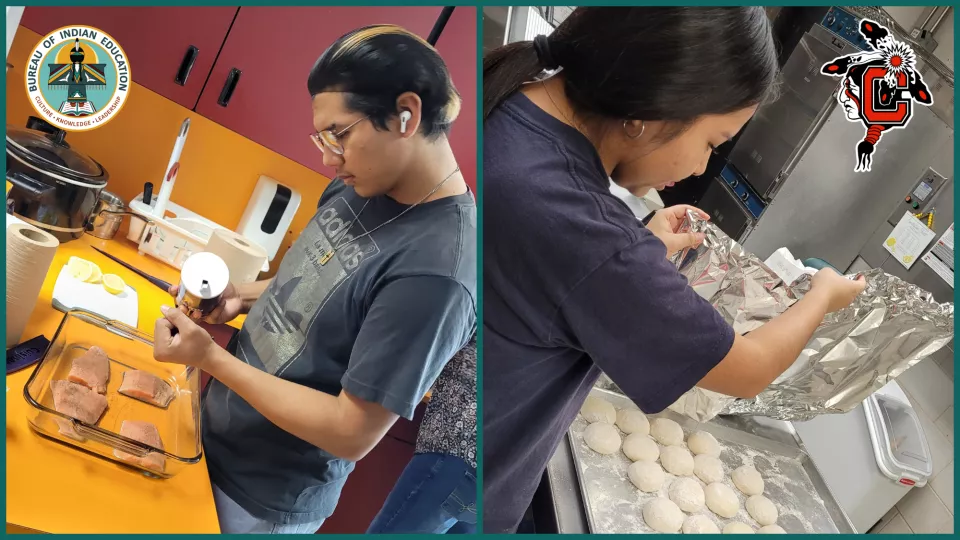
Handmade tortillas and frybreads from different tribes were abundant, each reflecting unique family recipes and techniques. Students offered both fresh-cooked and dried salmon, with explanations of the preservation methods. A student from the Confederated Tribes of the Colville Reservation also spoke about the sacred relationship between Pacific Northwest tribes and salmon.
Wild huckleberries and numerous wojapi varieties showcased the sweetness of traditional berry harvesting. Each wojapi recipe, whether made with chokecherries or other berries, told a story of family tradition and cultural celebration.
A student from Hopi Second Mesa introduced me to Hopi bean sprouts — a traditional food I had not previously encountered. This discovery reminded me that, despite my years in Native nutrition, new experiences and knowledge still await me. I am now determined to try Hopi bean sprouts and incorporate them into our nutritional education efforts.
Throughout the event, students brought their presentations to life with their tribes’ songs and dances. The pride and generosity with which students shared their knowledge, family histories, and favorite traditional foods created an atmosphere that felt both sacred and joyful.
The Chemawa Culture Fair exemplified what we hope to achieve at each of our Indigenous Food Hub sites. When students engage with culturally meaningful foods — preparing them, understanding their significance, and sharing them with others — they're not just learning about nutrition. They're connecting with their identity, honoring their ancestors, and ensuring these traditions continue for generations to come.
Every meal served with these ingredients is an opportunity to bring people together, foster pride, and celebrate.
Contact
Office of Communications
Bureau of Indian Education Central Office
U.S. Department of the Interior
1849 C Street NW, MIB-3610
Washington, DC 20240
Telephone: 202-941-0789
Email: biecommunications@bie.edu